
Understanding hair loss
Does Rosemary Oil Grow Hair? What the Evidence Shows
 Written by Akya Karahan, Junior Digital Content Marketing Specialist
 Medically reviewed by Dr. Muhammet, MD Anatomist and hair transplant specialist
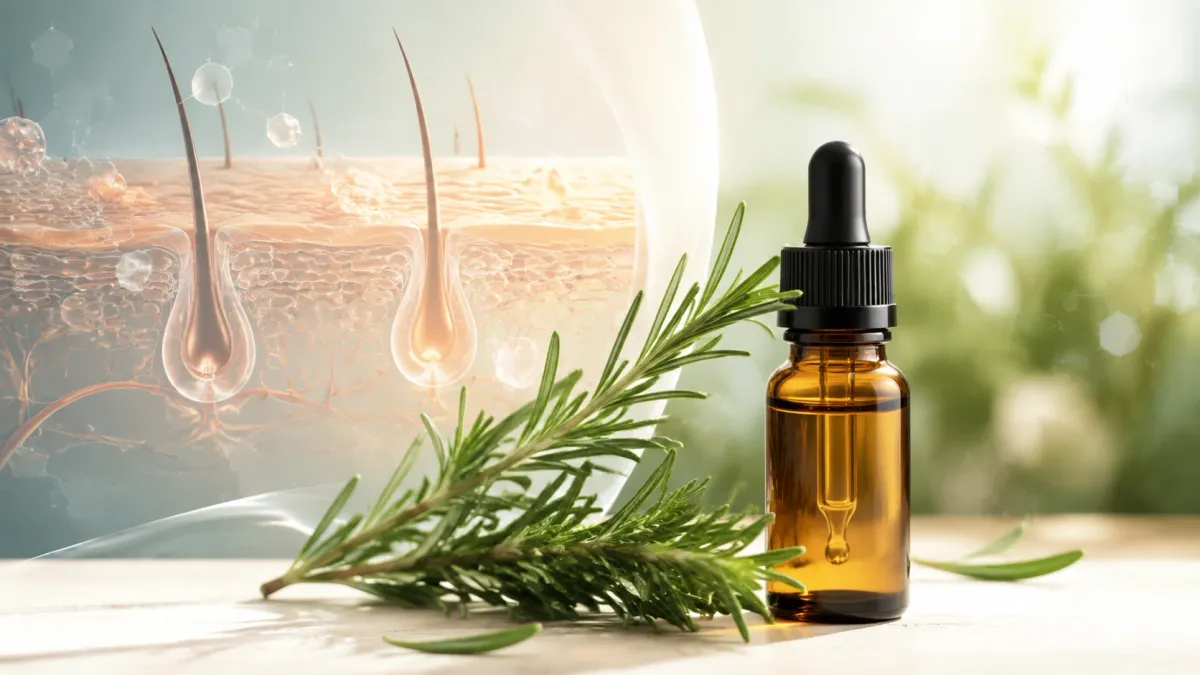
Partly. One small 2015 trial found rosemary oil matched 2% minoxidil for pattern hair loss over six months, but the evidence is thin and rests on that single study. It may modestly help some people if used consistently, yet it cannot regrow hair on a bald scalp or reverse advanced genetic loss.
What the evidence actually says
Rosemary oil became a viral hair-growth remedy on TikTok and Reddit long before most people checked what the research says. The honest picture: there is one frequently cited human trial, and it is small.
In a 2015 randomised comparative study, researchers gave 100 men with pattern hair loss either rosemary oil or 2% minoxidil for six months. Both groups saw a modest increase in hair count by the six-month mark, with no meaningful difference between them, and the rosemary group reported less scalp itching. That is genuinely interesting, but it is a single study with no placebo-only arm, so it tells us rosemary oil performed similarly to a low-strength minoxidil, not that it works in absolute terms. A 2022 review of essential oils for hair loss reached the same cautious conclusion: promising signals, thin evidence, more trials needed.
What it can realistically do
If rosemary oil helps, it most likely does so by improving scalp circulation and calming inflammation around the follicle. Some laboratory work points to its main compounds having mild effects on the same pathways that hair-loss drugs target, but that is a long way from proof in people.
So a fair expectation is modest. For someone in the early stages of thinning, whose follicles are shrinking but still alive, a consistent scalp routine that includes rosemary oil might support slightly better hair over months. It will not thicken a scalp overnight, and results, if they come at all, are gradual.
Why consistency matters, and how to use it safely
Any effect depends on regular, long-term use, much like the medications it gets compared to. A one-week trial tells you nothing. If you want to test it, give it three to six months and track progress with a monthly photo in the same light rather than judging by the mirror.
Two safety notes. Essential oils are concentrated and should be diluted in a carrier oil before they touch the scalp, and it is worth patch-testing first, because rosemary oil can cause irritation or an allergic reaction in some people. The American Academy of Dermatology notes that while some people find it helpful, it is not a substitute for treatments with stronger evidence, and anyone with significant loss should see a dermatologist.
Where it sits against proven options
This is the part the viral videos skip. Rosemary oil is, at best, a mild adjunct. The interventions with real trial evidence behind them are different beasts. Our guide to whether minoxidil actually works covers the topical the 2015 study compared it against, and our overview of PRP hair treatment looks at another clinic-based option. None of these creates new follicles either; they help the ones you still have.
The oil also cannot tell you what is causing your hair loss, and that is the more important question. If you are losing hair to an inherited, DHT-driven pattern, no topical oil will hold the line for long. Our explainer on the Norwood stages of male pattern baldness shows how that kind of loss progresses and why it behaves differently from temporary shedding.
When an oil is no longer the answer
Here is the plain version. If your thinning is mild and recent, trying rosemary oil for a few months costs little and may help a little, and it is reasonable to start there. But if you can see scalp through the hair, if a hairline or crown has clearly receded, or if loss has been progressing for a year or more, the follicles in those areas may already be gone, and nothing you rub on the skin will bring them back.
At that point the useful step is finding out where you actually stand rather than cycling through remedies. Our free graft calculator lets you match your own hair to the recognised stages in about a minute and gives an honest read on whether you are still in maintenance territory or past it. It runs entirely on your device, so nothing leaves your browser.
If you would like a person to look at it, you can send a few clear photos for a free, no-obligation online assessment. Being told your loss is mild and an oil-and-patience approach is fine is a perfectly good outcome, and we will tell you honestly if that is the case.
Medical disclaimer. This article is general information, not individual medical advice, diagnosis or a treatment recommendation. Hair restoration is surgery and outcomes differ from person to person. Always seek an individual assessment from a qualified medical professional before deciding on treatment.