Treatment
FUE Hair Transplant in Turkey
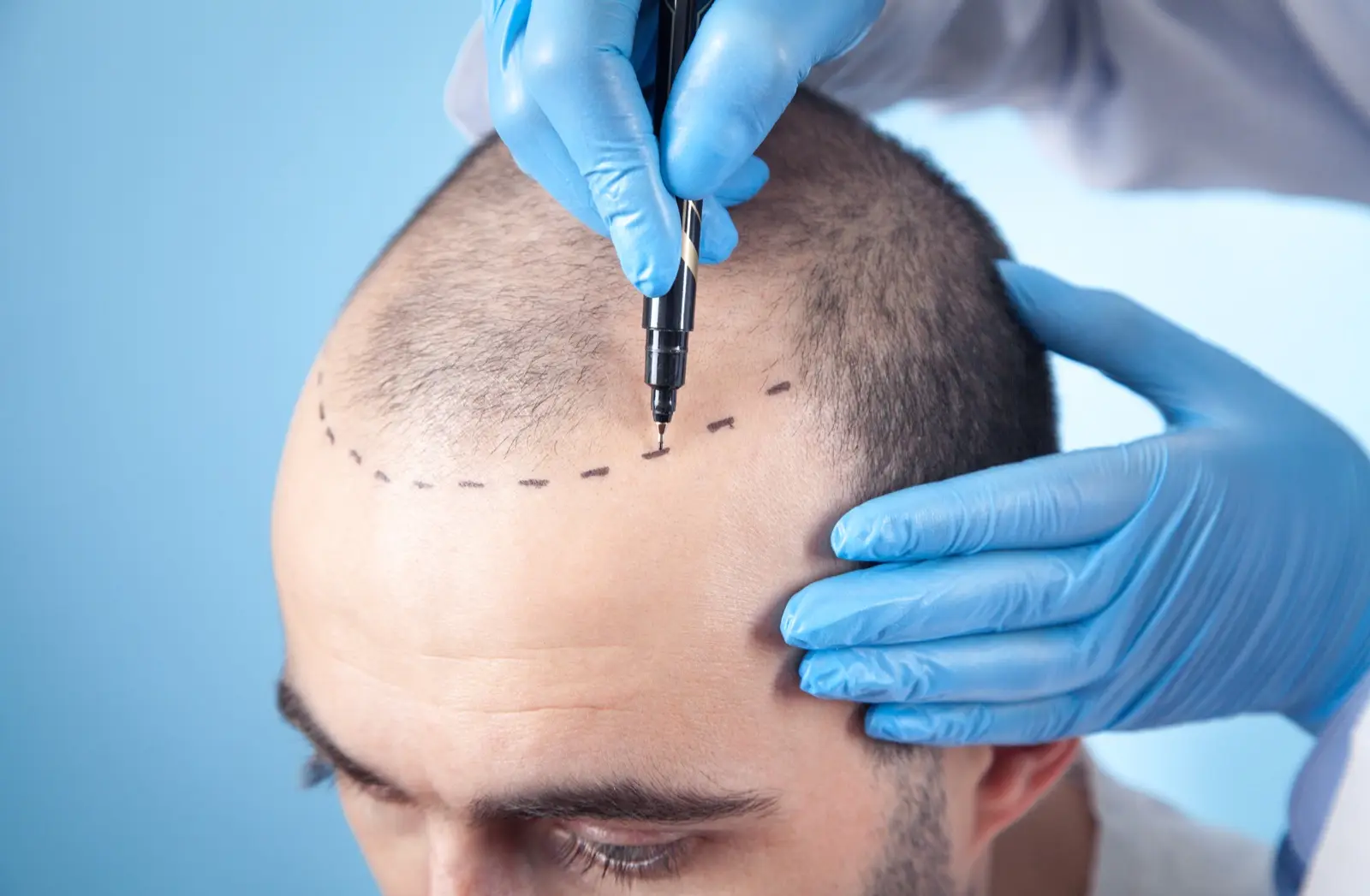
Follicular Unit Extraction removes follicular units from the donor area one at a time and places them into thinning or bald areas. It is minimally invasive and leaves no linear scar.
From €2,000 to €2,500 All-inclusive package pricing. Confirmed at consultation.
 Written by Akya Karahan, Junior Digital Content Marketing Specialist
 Medically reviewed by Dr. Muhammet, MD
At a glance
| Procedure length | 5 to 6 hours |
|---|---|
| Anaesthesia | Local anaesthesia |
| Hospital stay | 2 nights |
| Initial recovery | About 3 days |
| Scarring | No linear scar |
| Reported graft survival | 90-95% |
On success rates. Reported graft survival rates for follicular unit extraction vary between studies and depend on technique, graft handling and patient factors. Individual results vary.
In detail
Understanding FUE Hair Transplant
What an FUE hair transplant involves
FUE, or Follicular Unit Extraction, is the most widely used hair transplant method today. Your surgeon removes hair follicles one at a time from the donor area at the back and sides of your scalp, then places them into thinning or bald areas such as a receding hairline or the crown.
Because the follicles are taken individually with a micro-punch, FUE leaves no long linear scar. The donor area heals with tiny dot marks that are usually hard to see once the surrounding hair grows back, even at shorter lengths.
Who FUE suits
FUE works well for a receding hairline, a thinning crown, or filling in specific areas, as long as you have a healthy donor area and your hair loss has largely settled. If close control at the hairline matters most, compare it with a DHI hair transplant. If your loss is still changing quickly, your surgeon may suggest waiting or planning conservatively.
An unshaven or partially shaven approach is sometimes possible for smaller sessions, which suits people who would rather not have the whole head shaved. Whether that is an option for you depends on the number of grafts and is confirmed at consultation.
Donor supply is finite, and it can be measured. Density in the safe zone differs from person to person and with hair type, but a common working figure is around 65 to 75 follicular units per square centimetre. Many surgeons keep a single pass to roughly 10 to 15 extractions per square centimetre, which typically leaves a residual density of about 55 to 60, above the level at which thinning tends to become noticeable, though there is less room to work with if your starting density is at the lower end. That ceiling, rather than the size of the thinning area, often shapes a realistic plan, which is why larger cases are sometimes planned as more than one session, months apart. Your assessment also looks at what is causing your hair loss, since not every pattern of thinning is treated with surgery.
Your recovery, week by week
FUE is carried out under local anaesthesia, so you are awake and comfortable during the procedure. Most people take it easy for the first few days and return to desk work within about three to five days.
Knowing which stage you are in makes the quiet middle months easier to sit through. Washing usually starts from about 24 hours, and for the first couple of days you cool the forehead rather than the grafts themselves. Follow the written aftercare you are given, and contact your clinic or your own doctor if you notice spreading redness, discharge, a fever, or pain that is getting worse.
| Stage | What is happening | What you can do |
|---|---|---|
| First 48 hours | Grafts are not yet secure and are easily dislodged. Forehead swelling often begins. | Sleep with your head raised and avoid pressure on the grafts. |
| Days 3 to 7 | Crusts dry and begin to come away, and swelling often peaks. | Wash gently as instructed, without rubbing, and avoid strenuous activity this week. |
| Weeks 2 to 8 | Transplanted hairs commonly shed, which is expected. | Expect the area to look thinner, and keep it out of direct sunlight. |
| Months 3 to 4 | Most follicles are resting, and the area can look thinner than before surgery. | Take photos in the same light, and continue any medication you were advised to use. |
| Months 6 to 9 | Most people see visible growth, though it is often still fine and light in colour. | Cut and style as normal, and compare against your earlier photographs. |
| Month 12 onwards | Hair usually thickens and settles, sometimes beyond twelve months. | Review the result with your team, and ask what may help slow further loss. |
Results, and what your package includes
Reported graft survival for FUE commonly falls around 90 to 95%, though figures vary between studies and depend on technique, graft handling and your own healing. No specific result can be promised, and individual outcomes differ.
At Dr Vivo, FUE is part of an all-inclusive package from EUR 2,000, covering the procedure, two nights of hotel accommodation, VIP transfers and aftercare products. You receive a written plan and total cost after assessment, with no payment taken at the enquiry stage.
How the main techniques compare
A structured comparison, so you can see where FUE Hair Transplant sits rather than reading it in isolation.
| Technique | How grafts are placed | Linear scar | Typical session |
|---|---|---|---|
| FUE | Recipient incisions made first, grafts then placed | No | 5 to 6 hours |
| DHI | Implanter pen places grafts directly, no pre-made incisions | No | 6 to 8 hours |
| Sapphire FUE | As FUE, with sapphire-tipped blades for incisions | No | 5 to 7 hours |
| FUT | Strip of donor skin removed, grafts dissected from it | Yes, linear | 4 to 8 hours |
FUE Hair Transplant questions
What is an FUE hair transplant?
FUE stands for Follicular Unit Extraction. Individual follicular units are harvested from the donor area, usually the back and sides of the scalp, and placed into the recipient area. Because units are taken one by one, no linear donor scar is created.
How much does an FUE hair transplant cost?
At Dr Vivo, FUE is part of an all-inclusive package from €2,000. Prices in Western Europe and the United States are often several times higher for a comparable number of grafts. Your exact figure depends on graft count and is confirmed in writing after assessment.
Is an FUE hair transplant permanent?
Transplanted follicles are taken from areas that are usually resistant to the hormone linked to pattern hair loss, so they typically keep growing long term. Hair loss elsewhere on the scalp can still progress, which is why a long-term plan matters.
Does an FUE hair transplant hurt?
The procedure is performed under local anaesthesia, so you should not feel pain during surgery. Tenderness, swelling and tightness in the days afterwards are common and are usually managed with prescribed medication.
How long does the FUE procedure take?
Most FUE sessions run about 5 to 6 hours, though this depends on the number of grafts. Larger sessions can extend beyond this and are sometimes split across two days.
Does an FUE hair transplant leave scars?
FUE does not create a linear scar. It leaves tiny dot-shaped marks in the donor area, each under a millimetre, which typically fade and are hard to see once the surrounding hair grows, even at shorter lengths.
FUE vs FUT: which is better?
FUE avoids the linear scar left by FUT (the strip method) and suits people who wear their hair short. FUT can harvest a large number of grafts in one session. Which suits you depends on your donor supply and goals, and is a clinical decision made at consultation.
How long do FUE hair transplant results last?
The transplanted hairs are generally long lasting because they come from donor-resistant areas. The final result is usually judged at around twelve months, and looking after your scalp and general health supports the outcome over time.
How does an FUE hair transplant work?
A micro-punch extracts follicular units of one to four hairs from the donor area. Tiny recipient sites are created at the correct angle and density, and the grafts are placed into them. The aim is a natural growth direction that suits your face.
When can I wear a hat after an FUE hair transplant?
Most clinics advise waiting several days before wearing a loose hat, so nothing rubs or presses on the new grafts. Your team will give you exact timing and recommend a loose, clean option rather than a tight-fitting cap.
Free, no obligation
Get your personalised plan and quote
Send us a few photos and we’ll come back with a written plan, a graft estimate and an all-inclusive total cost. No payment is taken at this stage.
- Written plan and graft estimate
- All-inclusive total cost
- An honest view on whether surgery suits you
Independent sources on this procedure
We link to sources we do not control so you can check what we say against recognised medical authorities.
- Hair Transplantation, StatPearls, National Center for Biotechnology Information Peer-reviewed clinical reference covering surgical technique, graft handling and complications.
- Hair transplant surgery, American Academy of Dermatology Guidance from the largest professional dermatology association on what transplant surgery involves.
Explore
Related treatments
DHI Hair Transplant
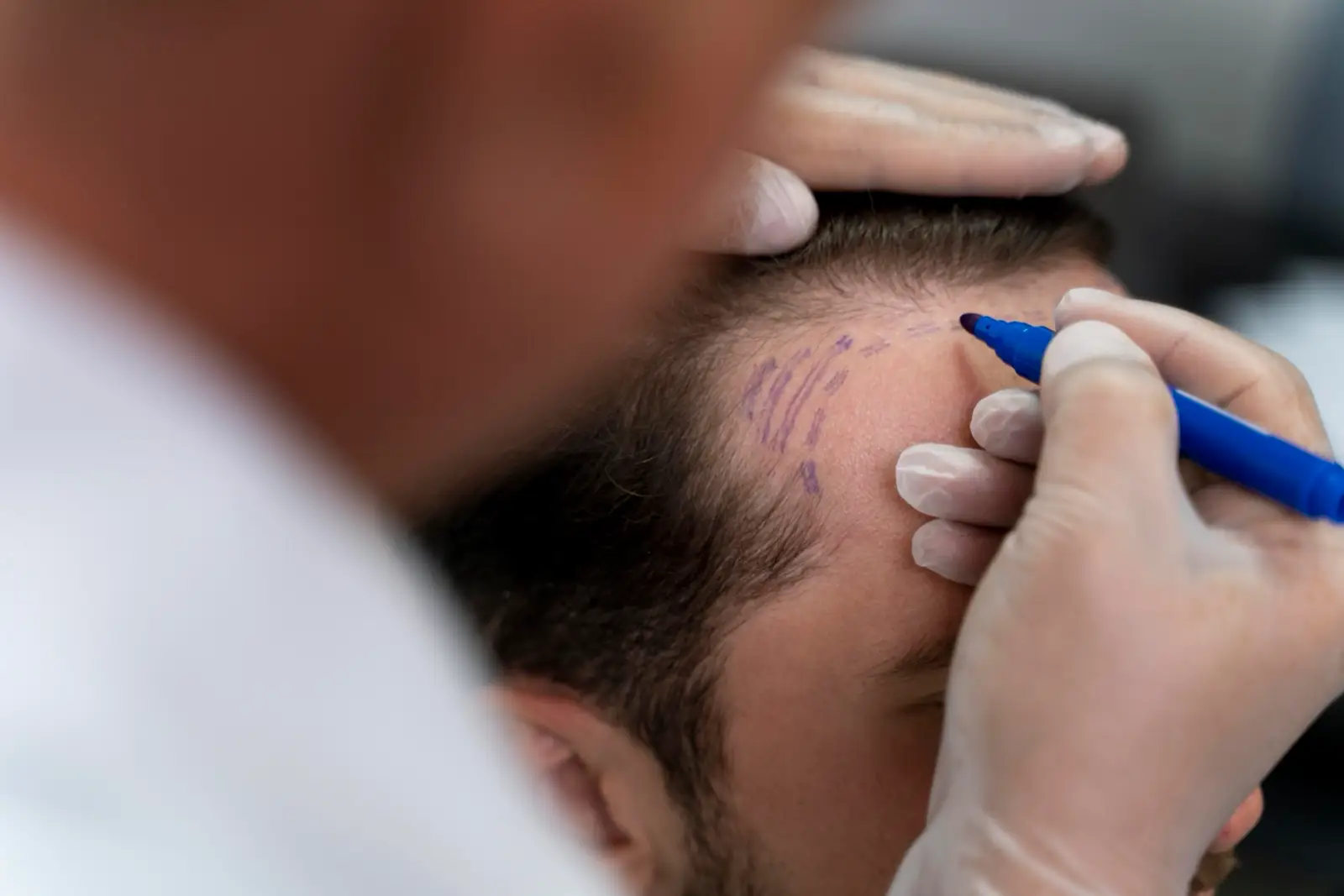
Direct Hair Implantation harvests the follicular units one by one with an FUE-style punch, then a Choi implanter pen places each graft without first creating all the recipient sites, giving close control over depth, angle and direction.
Sapphire Hair Transplant
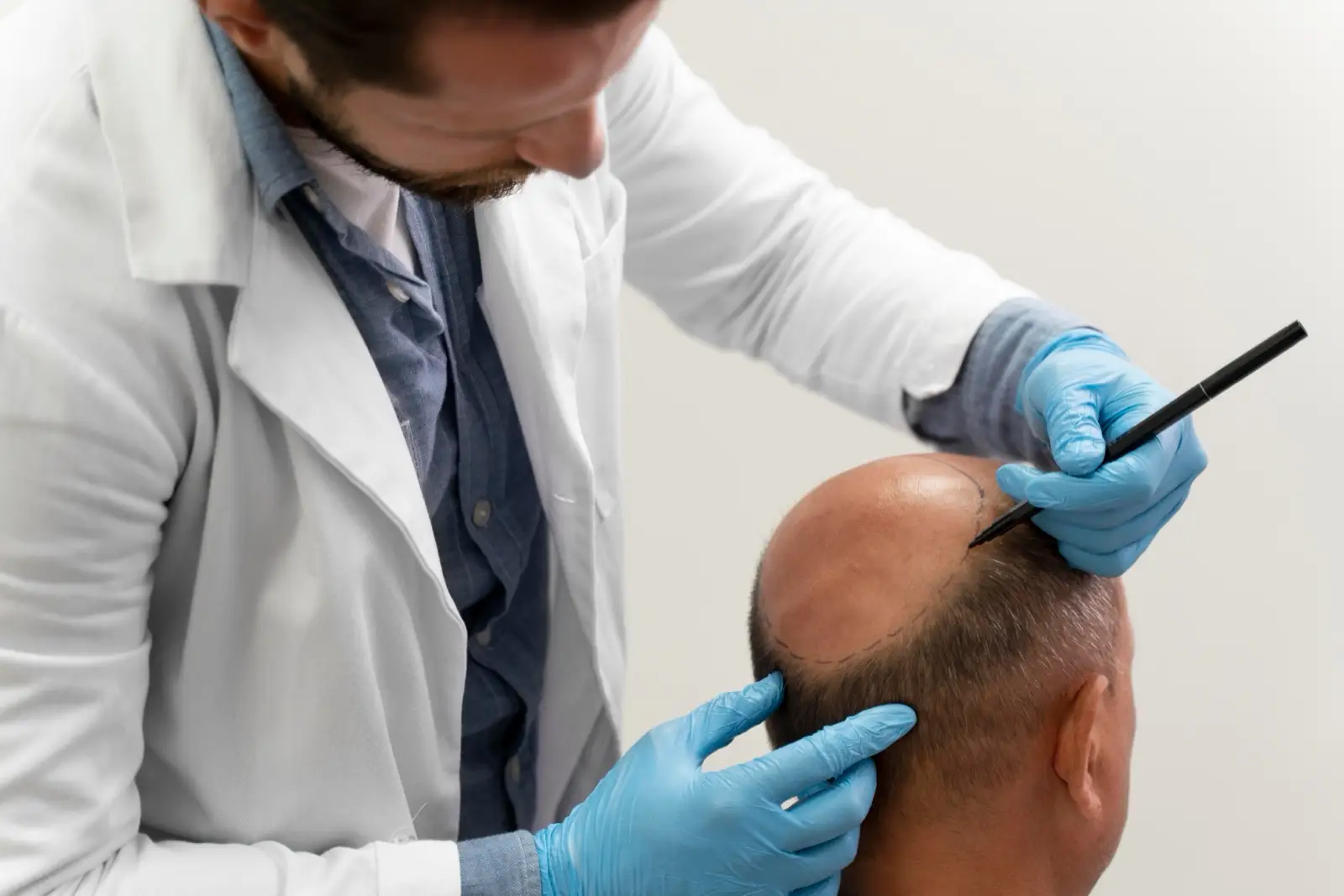
Sapphire hair transplant is a variation of FUE in which recipient incisions are made with sapphire-tipped blades rather than steel. The aim is smaller, more uniform incisions.

Afro Hair Transplant
Afro-textured hair curves beneath the skin as well as above it, so extraction requires a technique that follows the curl to avoid transecting the follicle.
See also our before and after gallery, the pre-operative guide, and frequently asked questions.
For what comes after surgery, read our hair transplant recovery timeline and our guide to how long a hair transplant lasts.