Understanding hair loss
PCOS Hair Loss: Causes, Treatments, and When a Transplant Can Help
 Written by Akya Karahan, Junior Digital Content Marketing Specialist
 Medically reviewed by Dr. Muhammet, MD Anatomist and hair transplant specialist
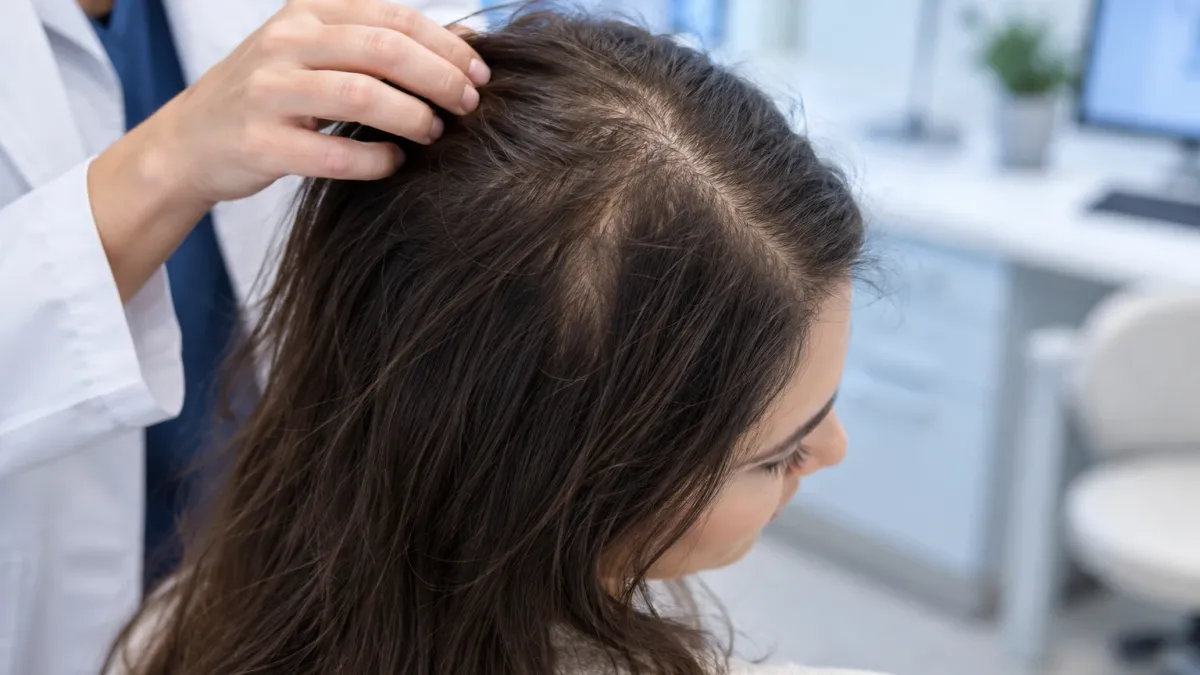
PCOS can cause hair loss. Raised androgens linked to polycystic ovary syndrome drive female-pattern, or androgenetic, thinning, usually along the part and crown rather than simple shedding. It is a chronic hormonal condition, so hair often responds to medical management, but the underlying imbalance is controlled rather than cured.
What causes hair thinning from PCOS?
Many women first notice it as a widening part or a ponytail that feels thinner than it used to, and the everyday worry is simple: is my hair falling out? With polycystic ovary syndrome the honest answer is more specific than ordinary shedding. PCOS and hair loss are linked through hormones. The syndrome raises levels of androgens, and in people who are genetically sensitive those androgens gradually shrink the hair follicles across the top of the scalp. The result is female-pattern (androgenetic) thinning, not a sudden shower of hairs down the drain. The NHS lists hair loss and excess hair growth among the common signs of the condition, which is why the same hormonal picture can thin the scalp while adding unwanted hair on the face or body.
Does PCOS cause hair loss, and does it grow back?
So can PCOS cause hair loss? Yes. Does it grow back? That depends on the stage the follicles have reached and whether the underlying hormones are brought under control. Early androgenetic thinning is often responsive: when androgen levels are managed and the follicles are still active, hair can recover density over months. Follicles that have been miniaturising for years may not fully return. PCOS itself is a chronic endocrine condition, so this is about control rather than a one-off fix. The thinning is not “permanent” in the way a scar is, but it will tend to progress if the hormonal driver is left untreated. That is the key difference from a temporary event.
How is this different from ordinary androgenetic alopecia?
It helps to see PCOS hair loss as female-pattern thinning with a hormonal accelerator. Cleveland Clinic explains that PCOS involves unusually high levels of androgens, and those are the same hormones behind androgenetic hair loss. The pattern is typically diffuse across the crown and along the part, with the frontal hairline often preserved. This is different from stress- or event-driven shedding such as postpartum hair loss, which usually recovers on its own, and from the receding, horseshoe pattern described in male pattern baldness. Telling these apart matters, because the right treatment for each is different.
What does PCOS hair loss treatment involve?
PCOS hair loss treatment starts with diagnosis, not with the hair. Because the root cause is hormonal, the first step is a doctor or dermatologist confirming PCOS and assessing your androgen levels, thyroid, iron and overall health. From there, management is usually medical and may include treating the endocrine picture, addressing insulin resistance where it is present, and using scalp treatments aimed at slowing miniaturisation and supporting the follicles that remain. None of this is something to self-prescribe, and results build slowly rather than overnight. The point is that the hair problem sits downstream of the hormones, so treating the hormones is what gives the follicles their best chance.
Is a hair transplant the answer for PCOS hair loss?
Here we have to be plain. A hair transplant is not a treatment for PCOS, and it is not the answer to active, hormone-driven thinning. Moving follicles does nothing about the androgens that are shrinking them, and transplanting into a scalp that is still actively thinning can look patchy as the surrounding native hair keeps receding. A transplant only becomes a sensible conversation when three things are true: PCOS has been diagnosed and is being managed, the pattern loss has been stable for a meaningful period, and there is a healthy donor area to move hair from. Diffuse thinning across the whole scalp, which is common in PCOS, often means the donor area itself is affected, so not every case is suitable at all. When a case is genuinely suitable, techniques such as FUE and DHI, and the approaches used in a female hair transplant that avoid shaving the whole head, may be worth discussing.
Where should you start?
If you think PCOS may be behind your thinning, see a doctor or dermatologist first. Get the diagnosis, have the hormones assessed, and give medical management time to work. Only if there is genuine, stable pattern loss with a healthy donor area does a transplant become relevant, and even then it supports the picture rather than treating the condition itself. When you simply want to understand roughly where you stand, our free hair transplant graft calculator estimates the likely stage in about a minute on your own device, and you can request a free no-obligation quote for an honest look with no pressure.
This article is general information and does not replace a consultation with a qualified doctor.
Medical disclaimer. This article is general information, not individual medical advice, diagnosis or a treatment recommendation. Hair restoration is surgery and outcomes differ from person to person. Always seek an individual assessment from a qualified medical professional before deciding on treatment.