Planning your treatment
Eyebrow Transplant: The Complete Guide to Procedure, Results and Cost
 Written by Akya Karahan, Junior Digital Content Marketing Specialist
 Medically reviewed by Dr. Muhammet, MD Anatomist and hair transplant specialist
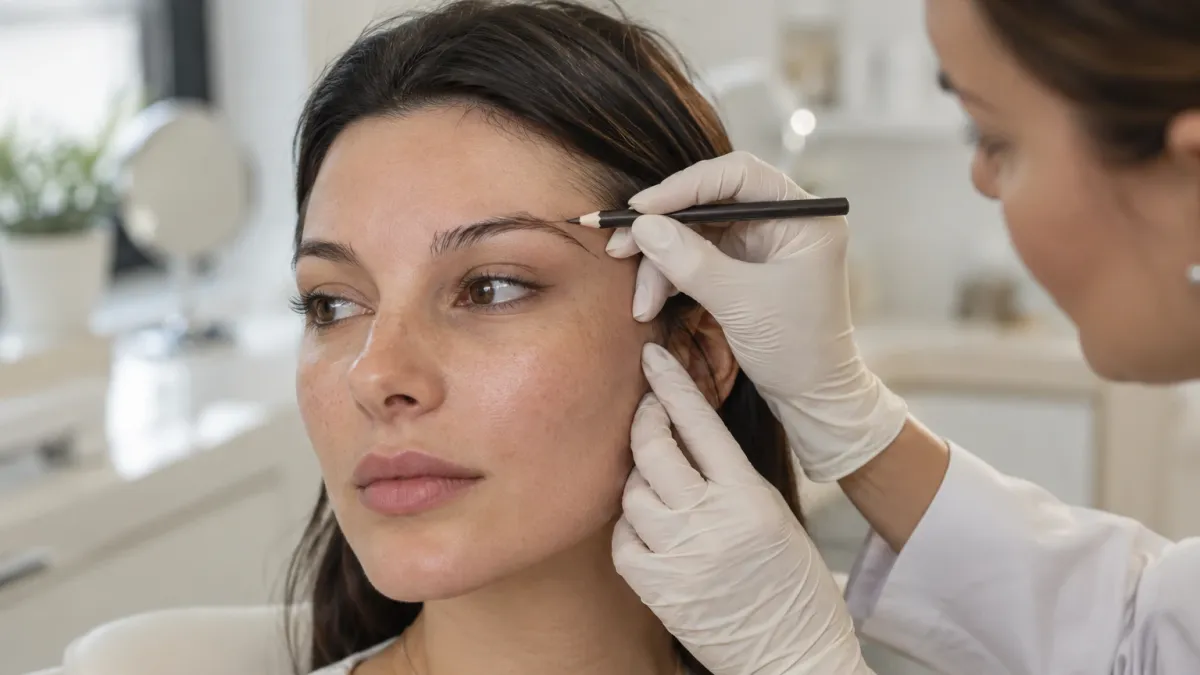
An eyebrow transplant moves single follicles from your scalp to your brows, placed one by one to follow the natural growth direction. It suits over-plucked, scarred or naturally sparse brows. Results look settled by around 8 to 12 months and last for life, though they need occasional trimming.
Thin, patchy brows are one of the most common reasons people look into facial hair restoration, and an eyebrow transplant is the only option that puts real, growing hair back where you want it. Years of over-plucking, a scar, or naturally sparse brows cannot always be fixed with a pencil or a tint forever. This guide walks you through exactly how an eyebrow transplant works, who it suits, what recovery looks like, and what it honestly costs, so you can decide whether it is the right move for you.
Who an eyebrow transplant suits, and who it is not for
An eyebrow transplant is a good fit if your brows are thin for a reason that will not reverse on its own. That includes years of over-plucking that has stopped the hair growing back, naturally sparse brows you have always had, age-related thinning, and gaps left by a scar, a burn, or an area of scarring alopecia. If you simply want a fuller shape and your own follicles have given up, surgery is the honest answer.
It is not for everyone. Active, untreated hair-loss conditions or inflammatory skin disease in the brow area should be settled first. If your eyebrow loss is from a cause that may resolve, such as a thyroid issue or a nutritional deficiency, that comes first. A good clinic will tell you when to wait, not just when to book. The clearest way to find out where you stand is a proper assessment rather than a self-diagnosis, which is why our free personalised quote starts with your photos and history.
How an eyebrow transplant works
The technique is the same family of surgery used on the scalp, scaled down and done with far more precision. The surgeon takes individual follicular units, usually single-hair grafts, from the back of your scalp, then places each one into the brow one by one. On the brow the detail that matters most is angle and direction: scalp hair grows straight out, but brow hair lies almost flat and changes direction across the brow, so each graft has to be set at the correct angle to follow the natural flow. Done well, the result reads as your own brow, not a row of implanted hairs.
Most eyebrow work uses FUE, where grafts are extracted one at a time from the donor area, or DHI, which uses an implanter pen to control the depth, angle and direction of each placement, a real advantage on a surface as exacting as the brow. The number of grafts is small compared with a scalp case, often a few hundred per brow, and it depends on your current density and the shape you want. You can get a rough idea of the range with our graft calculator before you ever speak to anyone. The full procedure is explained on our eyebrow transplant page.
Recovery and the growth timeline
Recovery from the surgery itself is quick, but the result takes patience. In the first week you will see tiny scabs around each graft, which lift on their own over several days. Within the first few weeks the transplanted hairs shed almost completely. This shedding phase alarms people who have not been warned about it, so know now that it is normal and expected: the follicle stays in place and simply resets before it grows again.
New growth usually starts at around three to four months, thickens through the middle of the year, and the final shape settles at roughly eight to twelve months. The pattern mirrors scalp surgery, which we cover in full in our hair transplant recovery timeline. The headline point is simple: do not judge your brows at week three, judge them at month ten.
How long the results last
An eyebrow transplant is permanent. Because the grafts come from the donor area at the back of the scalp, they keep the characteristics of scalp hair even after they are moved, which is what makes the result last for life. That same trait has one practical consequence: transplanted brow hairs grow a little faster and longer than ordinary brow hair, so you will need to trim them every couple of weeks to keep the shape tidy. It is a small routine, not a drawback, and understanding how donor grafts behave is worth reading up on in our guide to hair grafts.
Getting a natural result and avoiding regret
The difference between a natural brow and an obvious one is almost entirely about planning and placement, not the number of grafts. Ask any clinic three things: who designs the shape and are they doing it on your face in person, how they set the angle and direction of each graft, and how many single-hair grafts they will use. Realistic density matters too. A transplanted brow should look like a healthy brow, not a drawn-on block, and a clinic that promises a dramatic result from very few grafts, or the reverse, is not being straight with you.
The most common regrets come from rushing the decision and skipping the aftercare, the same pattern we see with scalp surgery in our list of post-transplant mistakes to avoid. For professional standards on choosing a surgeon, the International Society of Hair Restoration Surgery is a useful independent reference.
What an eyebrow transplant costs
Price is the question everyone wants answered first and no one can answer honestly without seeing you. The cost depends mainly on how many grafts your brows need, so a figure quoted before anyone has looked at your face is a guess. For a sense of the wider market, the NHS puts a hair transplant in the UK at anywhere between about 1,000 and 30,000 pounds, depending on the extent of the work and the clinic (the NHS on hair transplants). Eyebrow cases use far fewer grafts than a full scalp, so they sit at the lower, more contained end of that spectrum.
Rather than publish a headline price that would not apply to you, we give you two honest tools. Use the graft calculator for an idea of how many grafts your case is likely to need, then send your photos through the free quote for an exact, personalised price with no obligation.
Medical disclaimer. This article is general information, not individual medical advice, diagnosis or a treatment recommendation. Hair restoration is surgery and outcomes differ from person to person. Always seek an individual assessment from a qualified medical professional before deciding on treatment.