Planning your treatment
DHI vs FUE Hair Transplant: Which Technique Is Right for You?
 Written by Akya Karahan, Junior Digital Content Marketing Specialist
 Medically reviewed by Dr. Muhammet, MD Anatomist and hair transplant specialist
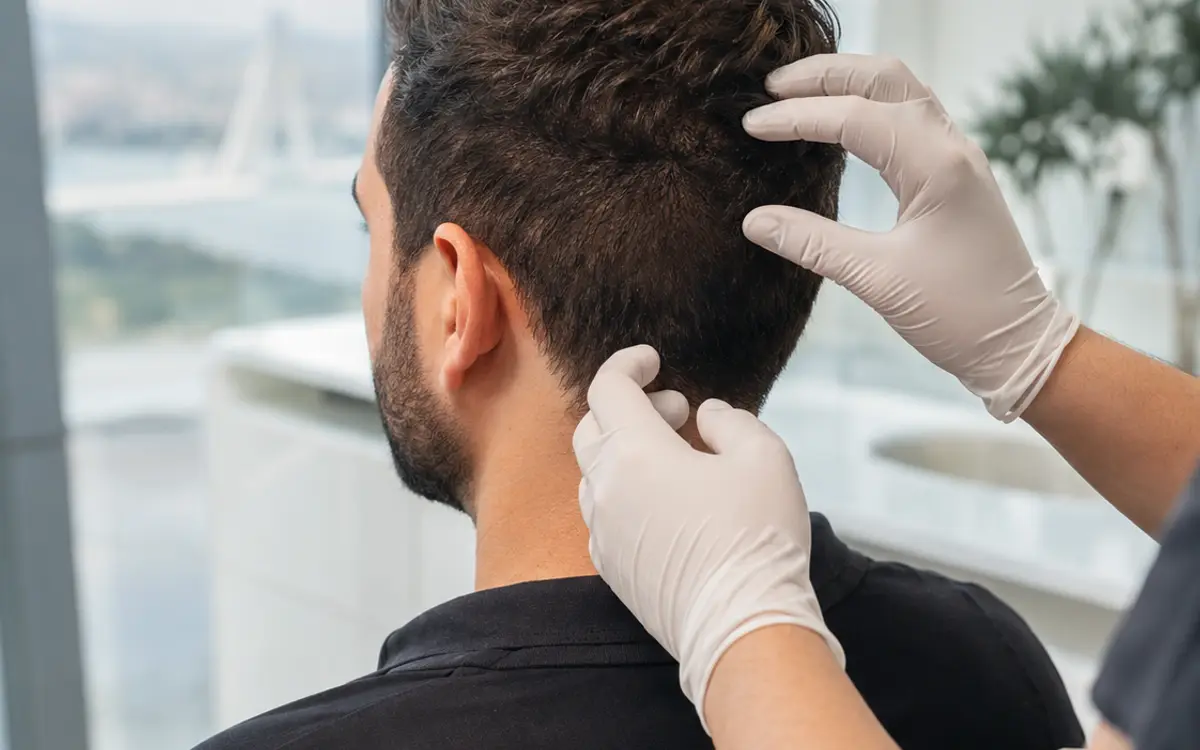
Neither is universally better. FUE and DHI both extract follicular units the same way; they differ at placement. FUE opens recipient channels first, then places grafts, while DHI uses a Choi implanter pen to open and place in one step. The right technique is matched to your hairline, density and case.
Both techniques start the same way
The debate over DHI vs FUE usually skips the part where the two are identical. Both are follicular unit extraction methods, and both begin by removing grafts one at a time from the donor area at the back and sides of the scalp, using a tiny punch that is normally well under a millimetre wide. No strip of scalp is cut out and there is no linear scar. The follicles are then sorted, kept in a chilled solution and counted before anything is implanted. If you want to understand how those grafts are measured and why the number matters, our guide to hair grafts and how many you need covers it in plain terms.
Because the harvest is shared, framing FUE and DHI as two rival operations is a little misleading. The real difference sits in the final step: how the grafts go back in.
Where the two techniques part ways
In classic FUE, placement happens in two stages. The surgeon first opens the recipient sites, tiny incisions called channels, across the thinning area, deciding the angle, depth and direction of each one. The team then places the harvested grafts into those ready-made channels. Separating channel creation from placement gives the surgeon a great deal of direct control over the pattern before a single graft goes in.
DHI, short for Direct Hair Implantation, merges those two steps. Each graft is loaded into a Choi implanter pen, a hollow needle with a plunger, and the pen both opens the site and pushes the follicle into place in one motion. Nothing is pre-opened and left waiting. According to the International Society of Hair Restoration Surgery, FUE describes the extraction method itself, which is why DHI is best understood as a placement variation of the same underlying approach rather than a wholly separate operation.
A third name you will meet is Sapphire FUE. This is standard FUE where the channels are opened with a sapphire-tipped blade instead of a steel one. It changes the tool that creates the channel, not the two-stage logic, so it sits firmly on the FUE side of the family.
Density, healing and hairline design
Because the DHI pen controls depth and angle at the moment of placement, it can allow grafts to be set very close together, which helps when a case calls for dense packing in a defined area. It also means each recipient site is opened only as its graft goes in, so the follicle spends less time outside the scalp. Many clinics favour DHI for the frontal hairline and for smaller, detailed zones for exactly these reasons.
The strength of FUE is breadth over larger surfaces. When a receding pattern covers a wide area and needs a high graft count in one session, opening the channels first and then placing efficiently can be the more practical route. Healing is broadly similar for both: the same pinpoint donor dots, the same scab-and-shed phase, and the same wait of roughly a year for the full result to mature.
Hairline design, the single most visible outcome, depends far more on the surgeon’s eye than on the label of the technique. Natural angles, deliberate irregularity and single-hair grafts at the very front are what make a result look believable, and a skilled team achieves that with either method.
When each technique suits a case
Rather than asking which is better in the abstract, it is more useful to think about what your case needs.
- A detailed frontal hairline or a small zone: the fine control of DHI is often a good fit.
- A large area needing many grafts in one sitting: FUE, including Sapphire FUE, can cover ground efficiently.
- Beard, eyebrow or other delicate work: the precision of an implanter pen is frequently chosen here.
- A shaving preference: DHI can sometimes be done with less shaving of the recipient area, which matters to some patients.
None of these are hard rules. Surgeons often combine approaches, using DHI at the hairline and FUE behind it in the same operation. Your donor supply, the size and shape of the area, the density you are aiming for and your hair characteristics all feed into the plan a good clinician builds around you.
Why “one is always better” is a myth
Both routes give natural, lasting results in skilled hands, because both move your own genetically resistant follicles to where they are needed. A method cannot rescue a poorly designed hairline, and a well-designed plan looks right whichever tool delivers it. Be wary of any clinic that sells a single technique as universally superior or promises a guaranteed outcome, because the honest answer is that the right choice is the one matched to your scalp, your goals and your donor area. What a team actually produces across different cases tells you far more than the name of the tool it favours.
Finding the right fit for you
The only way to know which technique suits you is to have your donor area, your pattern of loss and your goals assessed by people who plan around your case rather than sell you a label. You can send a few clear photos for a free, no-obligation assessment and quote, with no pressure to book anything. Weighing that advice against real before-and-after results will tell you far more than the DHI versus FUE label ever could.
Medical disclaimer. This article is general information, not individual medical advice, diagnosis or a treatment recommendation. Hair restoration is surgery and outcomes differ from person to person. Always seek an individual assessment from a qualified medical professional before deciding on treatment.